







Tech giant Google has expanded the creative power of its Gemini platform with the introduction of Lyria 3, a next-generation AI music model developed by Google DeepMind. The new feature allows users to instantly generate original 30-second music tracks using simple text prompts—or even images—marking another major step in the evolution of generative creativity.
Announced by product leads Joël Yawili and Myriam Hamed Torres, the update pushes Gemini beyond text, images, and video into fully automated music creation, making it possible for everyday users to experiment with sound without any production experience.
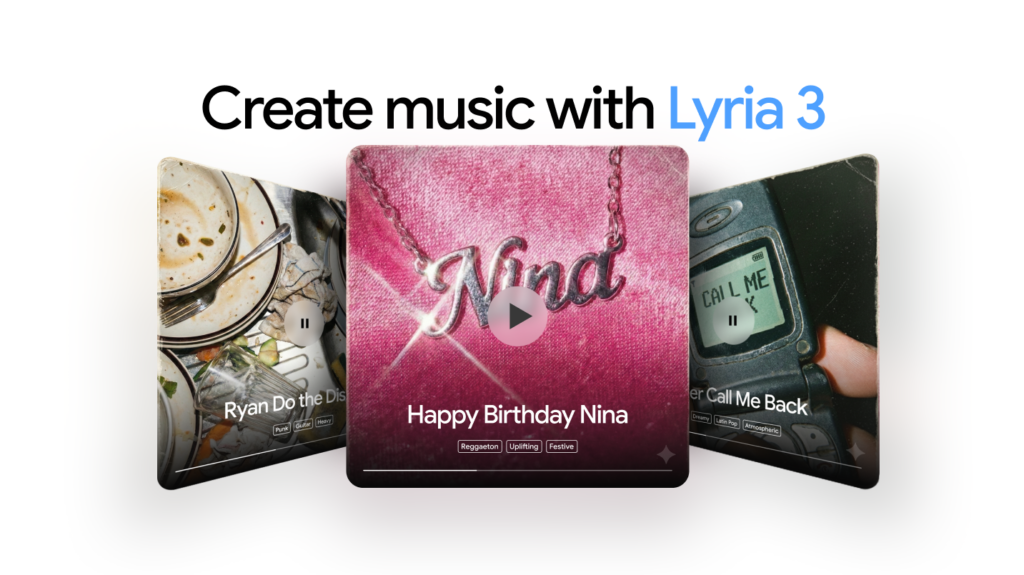
With Lyria 3, users can describe almost any idea and watch it transform into a fully composed track within seconds. A playful prompt like “a comical R&B slow jam about a sock finding its soulmate” can generate a complete piece featuring vocals, lyrics, and layered instrumentation. The system also allows users to upload photos or videos, which Gemini analyzes to capture mood and translate visual storytelling into sound. A nostalgic family picture could become a warm afrobeat tribute, while an outdoor hiking clip might turn into an atmospheric indie soundtrack.
The model introduces several improvements over earlier AI audio tools. Users no longer need to write their own lyrics, as Gemini automatically generates them from prompts. Creative control has also expanded, allowing adjustments to genre, tempo, vocal tone, and overall mood. Most importantly, the audio quality itself has improved significantly, producing more realistic, musically complex tracks that feel structured rather than experimental.
Each generated track comes with custom AI-generated cover art and can be easily downloaded or shared, reinforcing how the feature is designed for fast, expressive creativity rather than full-scale music production. The rollout also connects directly to the creator ecosystem through YouTube, where Lyria 3 is being integrated into Shorts to help creators generate unique background music or lyrical snippets tailored to their content.
Google says the technology has been built with responsible AI development in mind, particularly around copyright concerns. The system is designed for original expression and not for replicating existing artists. If a prompt references a specific artist, Gemini interprets it only as stylistic inspiration rather than imitation. All generated tracks are embedded with SynthID, an invisible watermark used to identify AI-generated content, and users can upload audio into Gemini to check whether it was created using Google AI.

Lyria 3 is currently rolling out in multiple languages for users aged 18 and older, with expanded access expected over time. Premium subscribers will receive higher generation limits, but the broader vision remains clear: turning everyday ideas, memories, and visuals into instant soundtracks.
As AI continues to reshape creative culture, tools like Gemini are shifting music from a technical skill into a form of everyday expression—where anyone can create a vibe, score a moment, or turn imagination into sound within seconds.